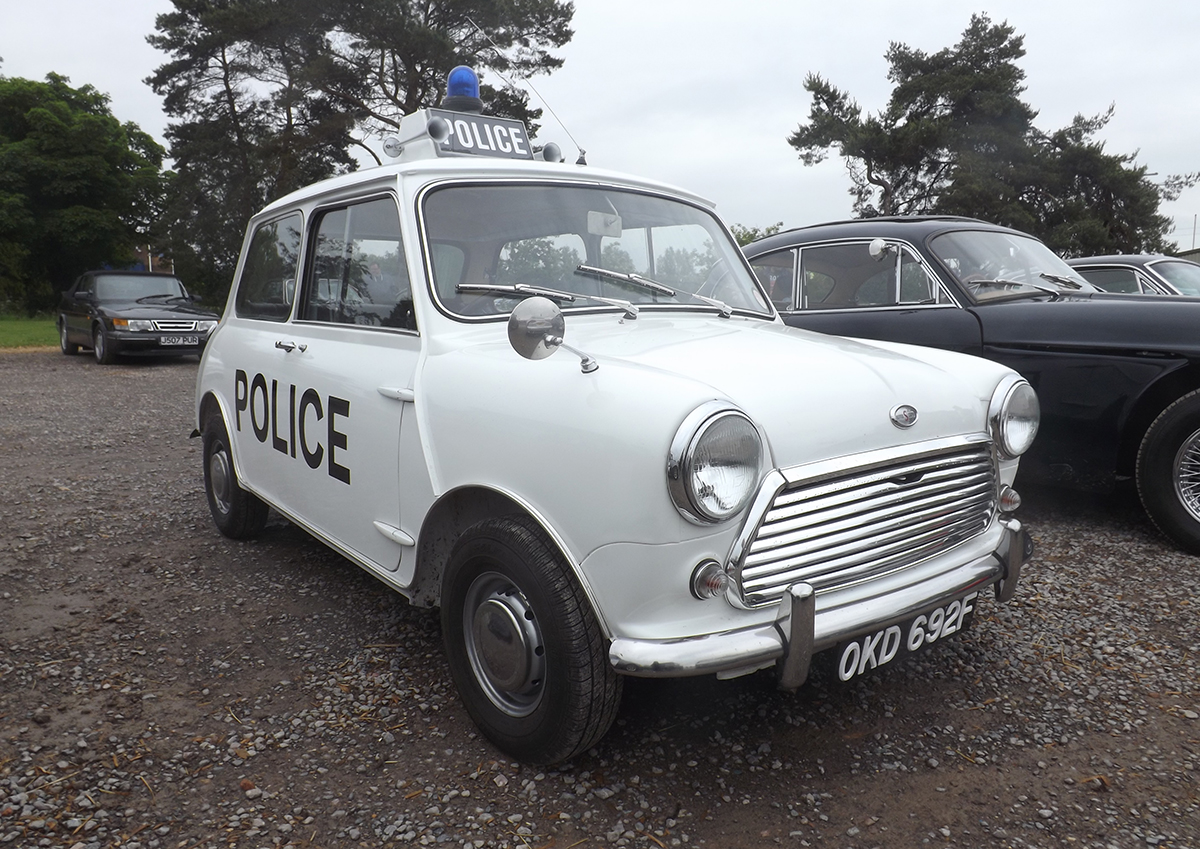


In 1967, the British Motor Corporation launched the Mini MkII (also known as the Morris Mini Minor and Austin Mini) at the British Motor Show in Birmingham. The success of the Mini MkI had exceeded expectations with over 1,190,000 being produced between 1959 and 1967. The iconic car had entered popular culture and was being driven by film stars like Steve McQueen, Peter Sellers and James Garner, along with Paul, John, George and Ringo of The Beatles. Even Enzo Ferrari owned a Mini.
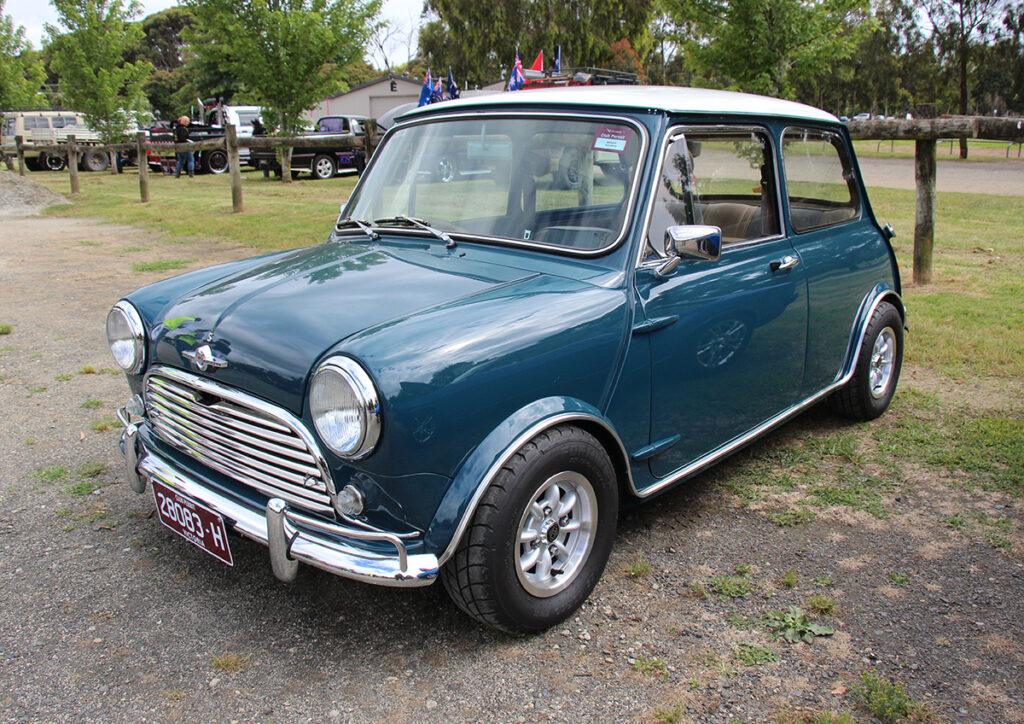
The changes in the Mini MkII were slight with a redesigned wider grille and a larger rear window for improved visibility. New, angular rear lights were added to the back, updating the car’s appearance. The MkII featured a more modern and a better-refined engine and, in October 1968, a full synchromesh gearbox was introduced for all models. Although updated, the MkII maintained the “basic” feeling of the original, including sliding windows, external door hinges, and simple door handles, while offering a more practical and usable experience compared to the MkI.
However, the primary objective was the reduce production costs. Although some of the 429,000 Mini MkIIs were produced overseas in Spain and even Chile, the bulk of production was in Longbridge near Birmingham in the UK. There were two engine sizes available – 848cc and 998cc. Unlike the Mini MkI, the model was only produced for 3 years before being replaced by the MkIII.
In 1969, all Austin and Morris badging was replaced with the singular “Mini” brand.
The Mark II is often considered a “transitional” model, balancing the classic, spartan feel of the 1959 original with the necessary, modern updates of the late 1960s. The car’s sales success helped sustain the Mini’s popularity before the major changes of the MkIII. Production ceased in late 1969.
The key market for the Mini MkII continued to be the United Kingdom and Ireland, although both France and Italy were high-volume purchasers, particularly for the Cooper and Cooper S models.
It is estimated that between 20,000 and 30,000 Morris Mini, Mini Coopers, and Mini Cooper S MkII’s still in existence in the UK, with many listed as SORN (Statutory Off Road Notification).
The Mini MkII had 3 gauges for speed, fuel and temperature mounted in a central pod, all designed and manufactured by Smiths Instruments. The larger Speedometer sat between two smaller gauges. The layout was simple and designed to keep production costs as low as possible.
The original gauge tooling for the classic Mini is still used today by CAI when manufacturing Smiths gauges for Mini enthusiasts. This ensures that the look and feel of any replacement gauge respects the origins of the iconic car.
As well as the classic mechanical gauges, CAI have developed a range of new digital versions. The Smiths Classic Mini digital speedometer has a larger OLED panel for odo or trip readout, onboard “drive-to-set” programming, billet case and fuel gauge programmable for different sender characteristics as well as LED warning lights.
The Mini MkII never reached the heights of popularity of the MkI, but marked a key chapter in the story of the classic Mini.
For further information on Smiths gauges for classic cars and motorcycles please contact us on:
Email: [email protected]
Phone: +44 (0) 1639 732200
You can also follow us on social media for regular news updates, photographs and technical information: