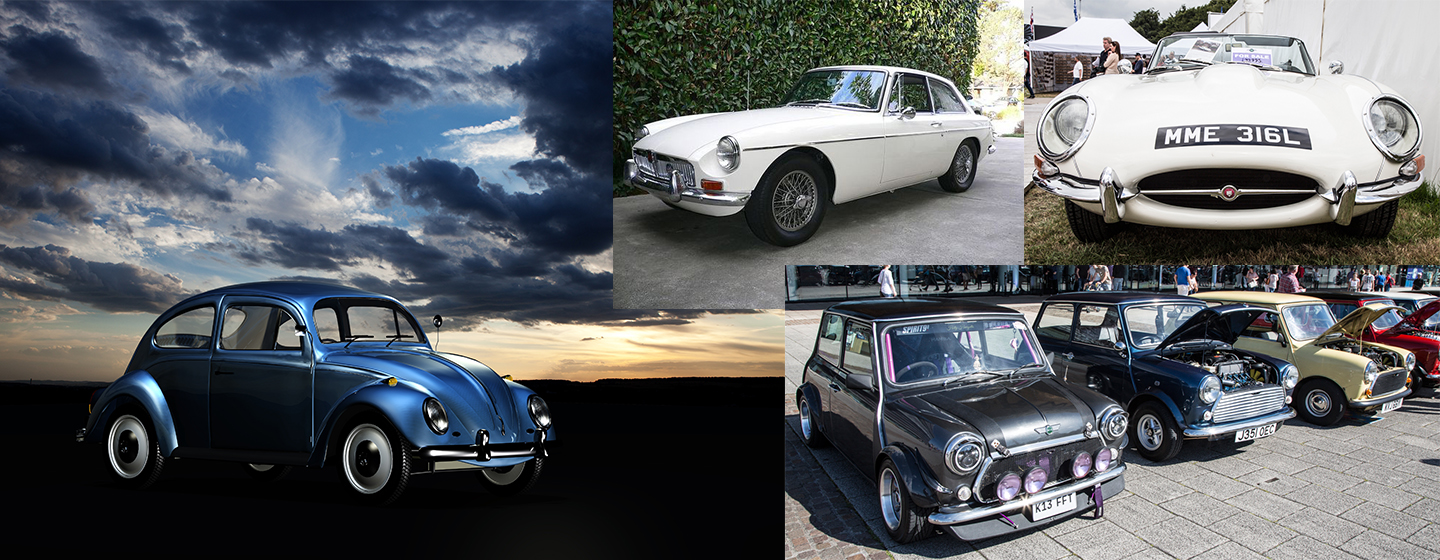


For many motoring enthusiasts, there is nothing more exciting than seeing an Aston Martin DB5, or original Mini Cooper on the road. It is no surprise that the love of the classic car shows no sign of diminishing, especially as the automotive industry evolves away from combustion engines to electrification, and with SUVs that all look extremely similar.
The ‘classic car’ is generally classed as one that is at least 25 years-old and has been lovingly maintained or restored. They include cars made by Jaguar, MG, Triumph, Porsche, and many others. This enthusiasm for the classic car is highlighted by the hundreds of classic car events staged across the UK each year.
Many of the classic cars feature Smiths and British Jaeger branded gauges. Indeed, Caerbont Automotive Instruments continue to make both original mechanical and new electronic versions of many of those gauges for classic car enthusiasts. To ensure continuity of the style, the design and the dimensions, the CAI team use the original drawings, many that date back decades. The CAI team, many who are car enthusiasts, share that love for the classic car.
With such a rich history, we have looked back through the records to find 10 interesting and possibly less known classic car facts.
The first practical, gas-fuelled automobile was patented by Karl Benz in 1886. Called the Benz Patent-Motorwagen, the car was built in Mannheim, Germany, making Germany the birthplace of the modern car.
In 2022, a 1955 Mercedes-Benz 300 SLR Uhlenhaut Coupe sold for an astonishing €135 million ($143 million). This unique car, one of only two ever built, was sold at a private auction by RM Sotheby’s at the Mercedes-Benz Museum. The proceeds from the private, invite-only auction went to a charity fund established by Mercedes-Benz. The 1955 Mercedes-Benz 300 SLR Uhlenhaut Coupe was a road-legal version of a legendary racing car, developed for endurance races.
As no survey has ever been conducted, identifying the most popular classic car might not be defined as a ‘fact’. Also, the most popular classic varies according to the region. Nevertheless, two classic cars worth noting as ‘favourites’ in their own countries are the Ford Mustang in the USA and the Jaguar E-Type in the UK.
Since the launch of the Ford Mustang in 1964, the car has defined the muscle and pony car era, offering style and performance at an affordable price.
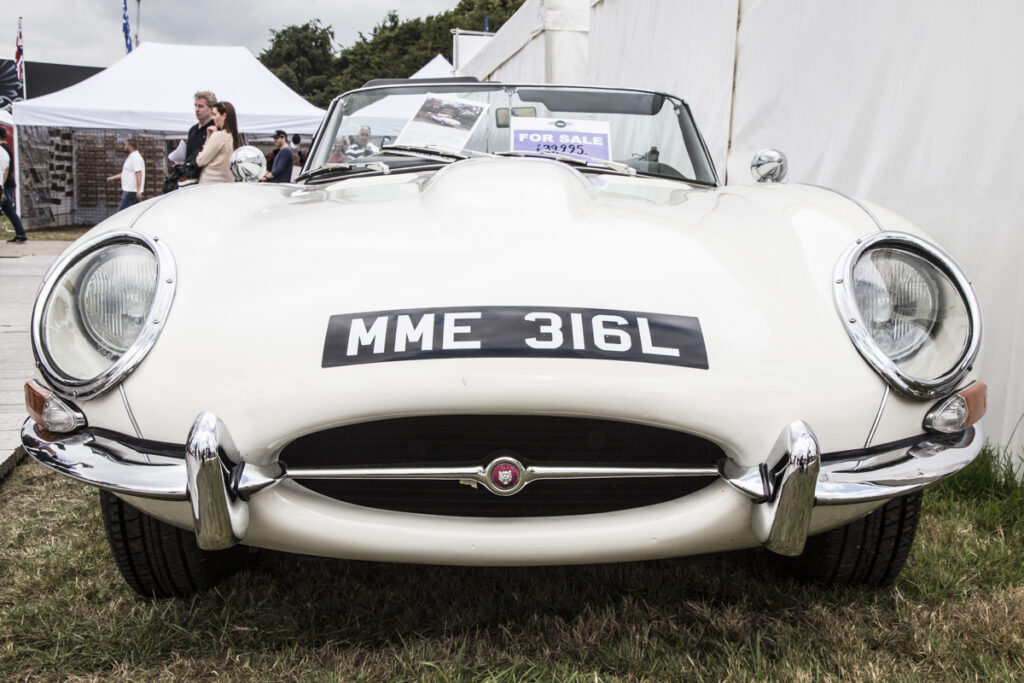
The Jaguar E-Type reflects the UK’s love of the Swinging Sixties, an incredible time of innovation, creativity and success for the UK. The Jaguar E-Type’s immense popularity stems from its breathtaking, aerodynamic design (dubbed “the most beautiful car ever” by Enzo Ferrari), and the car’s surprisingly affordable price for the exceptional performance.
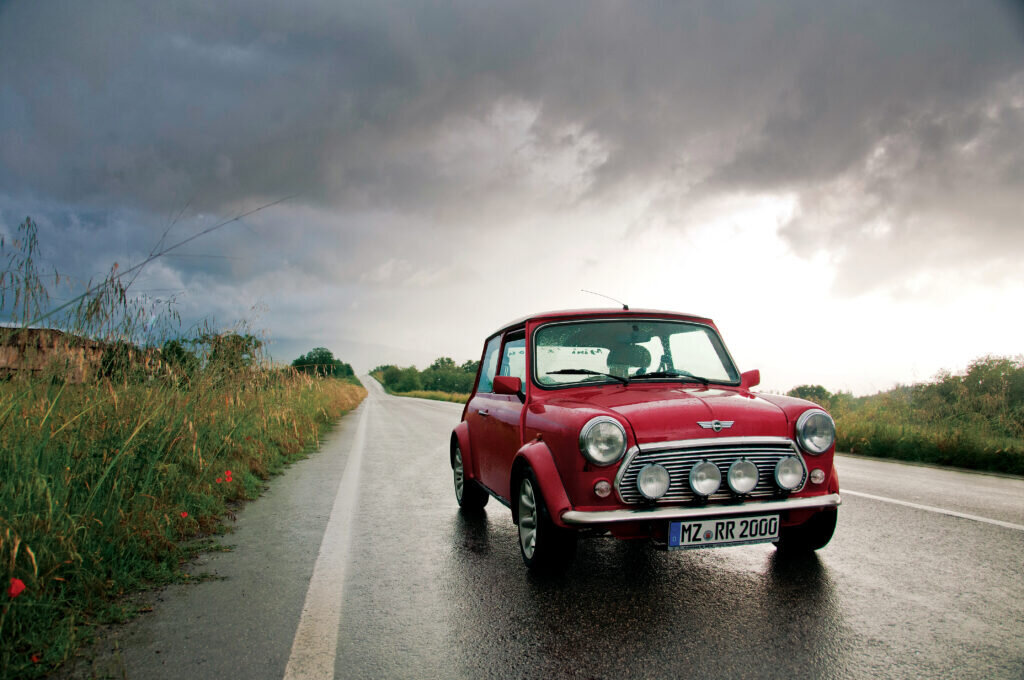
The classic Mini was borne at a time of crisis. The Suez Crisis caused fuel shortages around the world and the British Motor Corporation (BMC) responded by developing a small and very fuel-efficient family car. At the end of 2024, it is estimated that there are over 23,300 classic Minis still licensed and driving on the roads around the UK.
Could any motorist claim to have never exceeded the speed limit? We don’t think so, although maybe not the 192-mph as registered in 2015 by a Nissan GT-R on the M1 motorway (where the limit is 70 mph). The very first speeding ticket was issued on January 28, 1896, in Paddock Wood, Kent, England, to Walter Arnold, who was caught driving his Benz motorised carriage at 8-mph in a 2-mph zone, leading to a chase by a police officer on a bicycle and a fine for several offenses, including speeding.
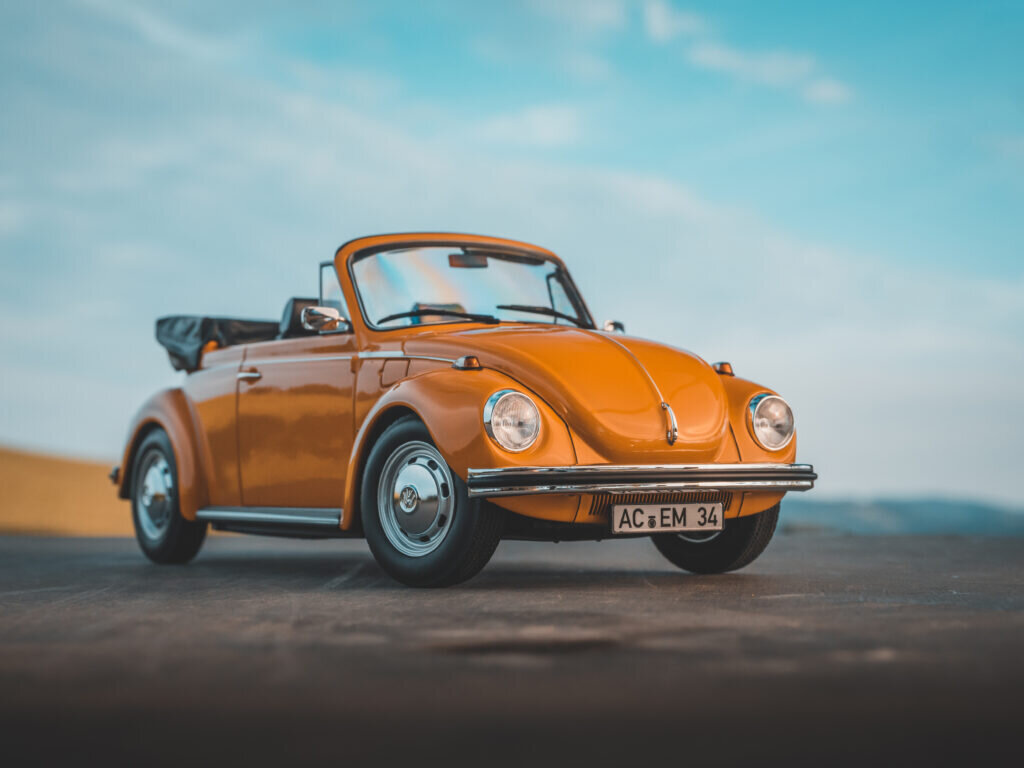
The most globally produced ‘classic car’ is open to some interpretation, but is generally considered to be the Volkswagen Beetle. Over 21.5 million original Beetles were produced, making it one of the most mass-produced cars ever. The classic Volkswagen Beetle (Type 1) had an incredibly long production run, starting in Germany in 1946 and continuing globally until the very last one rolled off the line in Mexico in July 2003, making its production span over 60 years, though West German production ended in 1979. The Beetle was revived in 1997, with a new electric model expected in 2026.
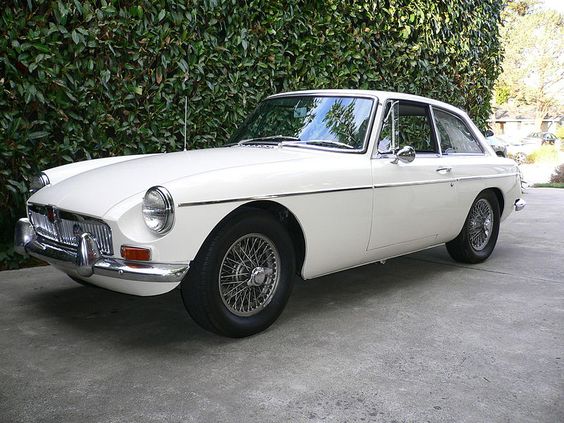
Once again, there is no exact data to confirm the fact, but MGB is a strong contender for the most globally exported classic car, with over 77% of its 512,000-production run sold abroad, especially to the US, making it Britain’s top classic export success alongside its predecessor, the MGA. The MGB and MGA were built by MG under the ownership of the British Motor Corporation (BMC) from 1962 to 1968 and then by British Leyland from 1968 to 1980. Other top globally exported classics include the Austin-Healey 3000 (mostly to North America), the iconic Mini, a British cultural export success with millions sold internationally, and the Porsche 356.
The fastest classic car depends on definition, but key contenders for cars built before 1960 include the Jaguar XK120 (124.6-mph in 1949), the Mercedes-Benz 300 SL Gullwing (around 151-mph in the mid-50s), and the Aston Martin DB4 GT (152.5-mph in 1959). In the 1960’s, the fastest cars included the AC Cobra Mk III 427 (around 165-mph), the Iso Grifo GL 365 (around 161-mph), and the race-proven Ford GT40, which exceeded 200-mph.
The Porsche 916 is extremely rare, with only 11 prototypes built, making it one of the rarest Porsches and a contender for one of the rarest cars globally. Only 11 factory-built prototypes were ever made in 1971-1972, but the car never went into mass production, existing only as development cars. The project was scrapped due to high development costs and the risk of it overshadowing the 911.
The classic car with arguably the biggest production engine is the Pierce-Arrow Model 66 (and the Peerless Model 60 counterpart) from around 1912, boasting a massive 13.5-litre inline-six engine, rivalled only by the later, super-luxury Bugatti Royale at 12.7 litres.
Of the approximately 1,250 Pierce-Arrow Model 66s produced between 1910 and 1918, around a dozen or more are known to survive in various conditions in private collections and museums.
Only seven Bugatti-Royale cars were built between 1927 and 1933, and one was destroyed in a crash in 1931. The remaining six Bugatti Royales are considered some of the rarest and most expensive cars in the world, with most residing in museums or major collections.
To finish our look at some of the more obscure classic car facts, here are four questions on classic cars that may be challenging in any company or family quiz.
For further information on Smiths gauges for classic cars and motorcycles please contact us on:
Email: [email protected]
Phone: +44 (0) 1639 732200
You can also follow us on social media for regular news updates, photographs and technical information: