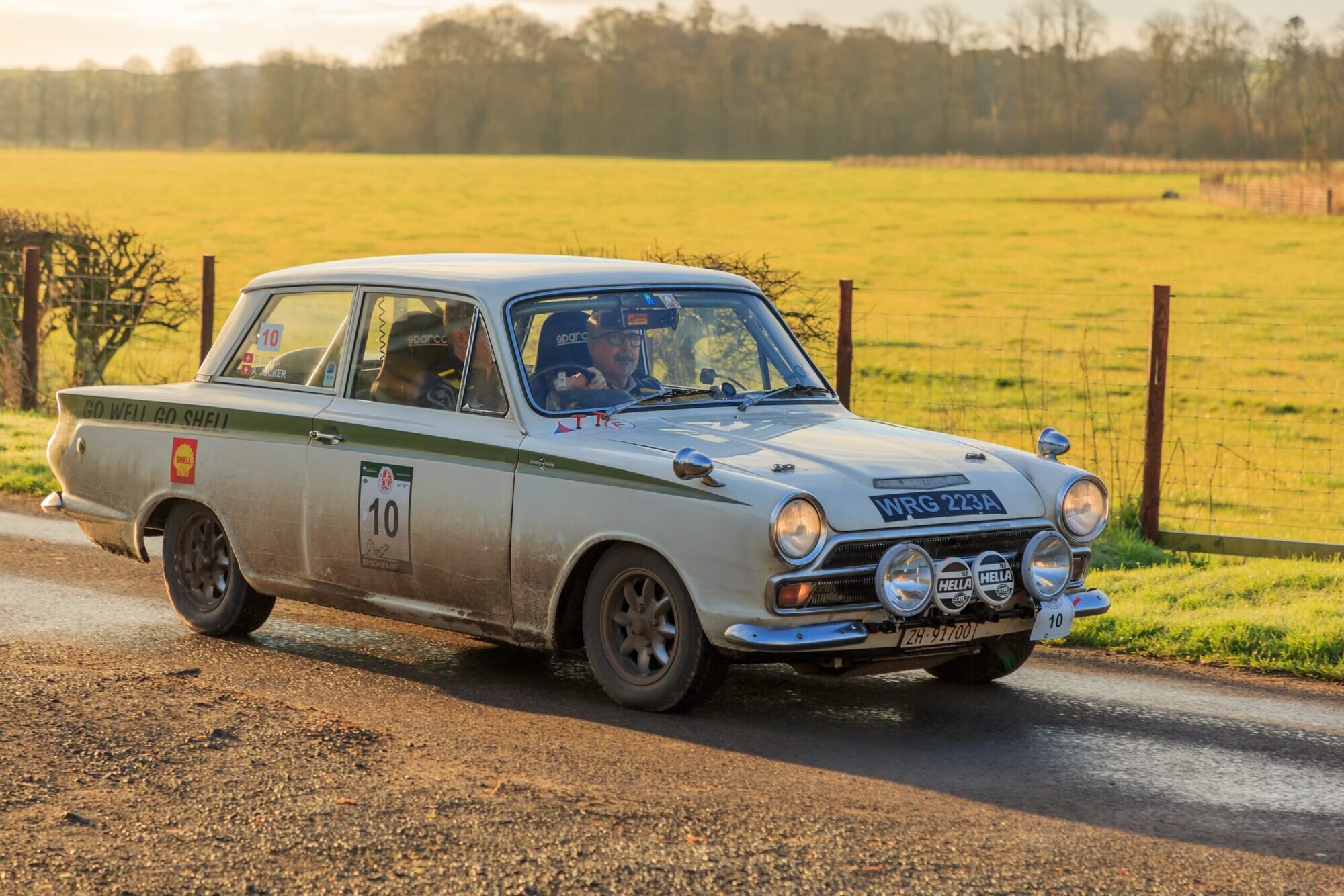


The story of the Ford Lotus Cortina begins in early 1963 when the Ford Motor Company’s Walter Hayes approached Lotus founder Colin Chapman. The aim was to develop a high-performance version of the standard Ford Cortina for Group 2 racing homologation. This development of a competitive engine for motorsports would enhance the company’s and car’s performance image.
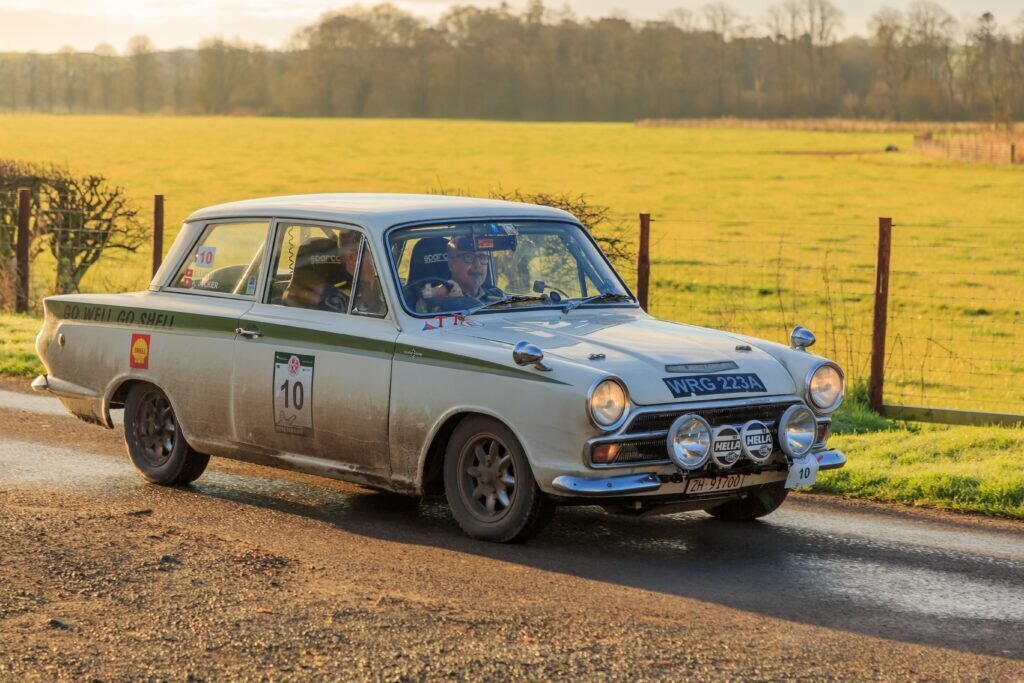
Ford launched the Cortina in the UK in September 1962 and the car instantly became a popular family car. Built by Ford of Britain at their plant in Dagenham, UK, the Cortina was so popular that, at times, one in every six cars built in the UK was a Cortina. Production continued until 1982 and it is estimated that over 4.3 million were built globally, with nearly 2.6 million sold in the UK alone.
Following the lifting of a self-imposed ban on motorsports involvement in 1962, Ford launched the “Total Performance” program to attract younger buyers and improve brand image through racing success.
Ford needed a high-performance small saloon car that could win in touring car championships and rallying to meet homologation requirements. Lotus, with founder Colin Chapman’s renowned engineering expertise and racing pedigree, was the ideal partner to transform an ordinary Ford Cortina family car into a track hero.
Lotus was already developing a twin-cam cylinder head designed to be adapted to a Ford engine block. Ford saw the potential of this engine and approached Chapman about using it in the Cortina model. This engine was used in the Lotus Elan and later became the foundation for the Ford Cosworth DFV engine that dominated Formula 1 for decades.
Ford also leveraged Lotus’s expertise in lightweight design, chassis dynamics, and suspension tuning to significantly improve the handling and performance of their mass-market vehicles.
The collaboration provided Lotus with a reliable, mass-produced engine block and a significant cash injection, which helped fund their own racing ambitions and road car production.
The Ford Lotus Cortina transformed Ford’s image by dominating saloon car racing and rallying with several championship wins. On the Touring Car circuit, the Ford Lotus Cortina recorded a series of global titles including Jim Clark’s British Saloon Car Championship in 1964.
Despite a reputation for unreliability, the Ford Lotus Cortina also performed well in rallying. However, the first notable victory did not come until late in 1965 when Roger Clark and Graham Robson won the Welsh International Rally. The Ford Lotus Cortina finally won the RAC Rally in 1966, driven by Bengt Söderström and navigated by Gunnar Palm, marking a significant victory for the British saloon car in international rallying
The car’s success in motorsports made the Ford Lotus Cortina a highly desirable road car for enthusiasts, boosting both Ford and Lotus’s reputations.
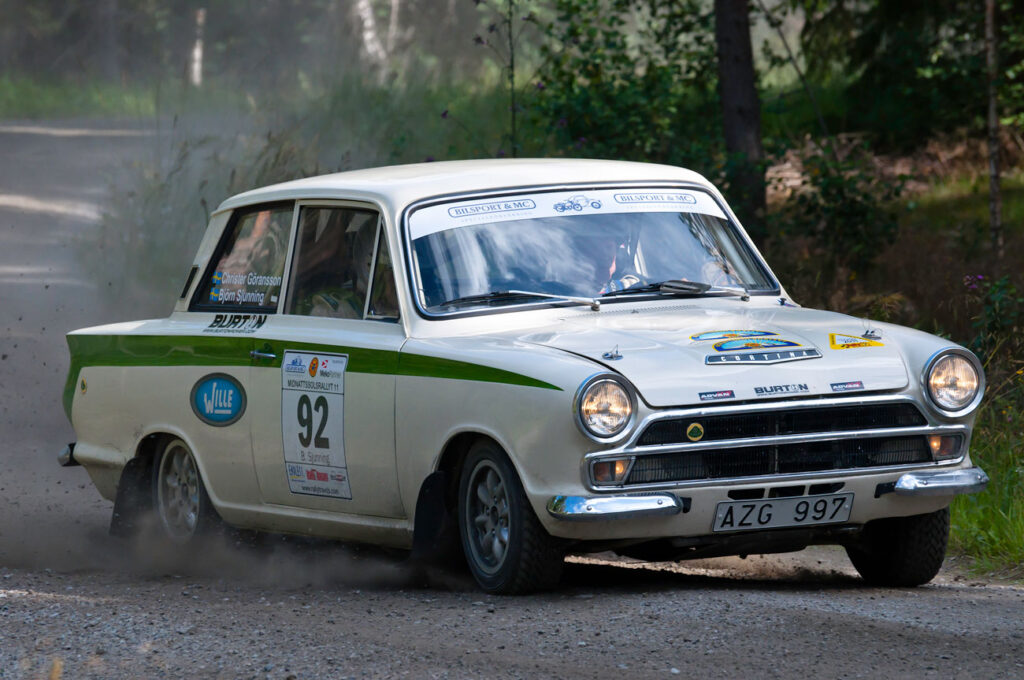
The Ford Lotus Cortina Mk1 was built between 1963 and 1966. The Mk1 was very popular and earned rave reviews, with one magazine describing the car as a “tin-top version of a Lotus 7”. Motoring enthusiasts now had an alternative to the Cortina GT or Mini-Cooper, and overweight ‘sports cars’ like the Austin-Healey 3000.
The MK1 featured a 1558cc Lotus twin-cam engine (around 105-120 bhp) with Weber carbs or fuel injection, mated to a close-ratio gearbox, giving 0-60 mph in around 10 secs and a 107-110 mph top speed. Key specifications included Lotus-modified front MacPherson struts and a unique De-Dion rear axle with coil springs, front disc brakes, wider steel wheels, lightweight body panels (on some), and a distinctive 140mph speedometer in the cabin.
However, Ford wanted to make changes for the Mk2. The Mk1 had exceeded expectations, but the public linked the competition wins with Lotus and the car’s negative aspects with Ford. Ford still wanted to build a Mk2 Lotus for competition, but Lotus were moving from Cheshunt to Hethel (both UK sites) and it was inopportune timing for building a new model.
Ford were also concerned with the unreliability of the Lotus built cars and so a decision was made at Ford to continue, but with a new focus on making the car more cost effective. Hence Ford decided to build the car at the Dagenham plant, alongside the other Cortina models. However, this was only possible if the build was much easier than the Mk1 and the new model could be made alongside Mk2 GT production, just with a different engine and suspension.
The more powerful and wider Mk2 was launched in March 1967, about a month after the standard Mk2 saloon and estate models. The Ford Lotus Cortina Mk2 featured the 1.6-litre Lotus Twin Cam engine (around 109-115bhp), but was built on the Mk2 Cortina chassis. The Mk2 featured improved mechanicals, but was built by Ford, not Lotus, using some Lotus parts like the engine and close-ratio gearbox, offering a capable, though less raw, sporting saloon with 4-speed manual transmission and enhanced suspension. Key specifications included a top speed of 104 mph and improved chassis with anti-tramp bars, though it lacked the Mk1’s lightweight panels.
Production of the Ford Lotus Cortina ceased in 1970.
Lotus already had a long-standing relationship with Smiths Instruments when Ford approached them to develop the Ford Lotus Cortina. Smiths branded speedometers, tachometers and other gauges had featured in the Elan, Elite and Europa and so Smiths provided the gauges for the Ford Lotus Cortina.
The standard dashboard featured four gauges: a speedometer, tachometer, fuel gauge, and oil pressure and water temperature gauge.
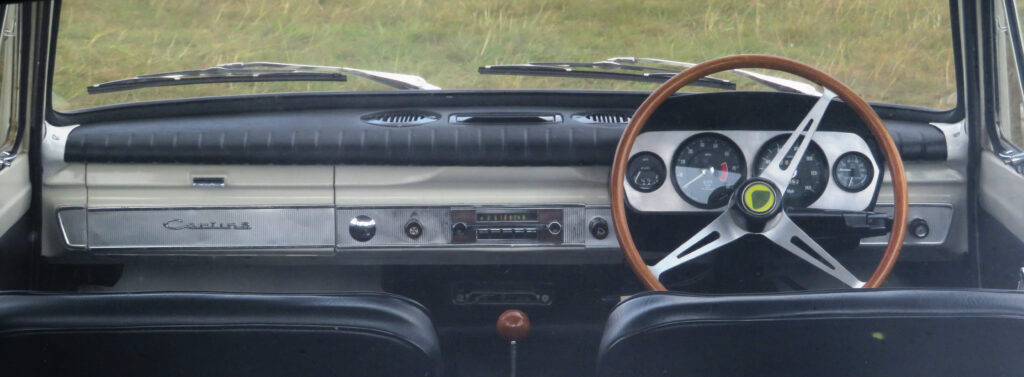
CAI continue to manufacture replacement gauges for the Lotus Range in the UK, using the original drawings to ensure continuity of the styling and adopting modern technology for enhanced operation.
The Ford Lotus Cortina holds a significant legacy as the “daddy of all super saloons,” a potent icon of 1960s British motorsport that blended Ford’s mass-market appeal with Lotus’s engineering prowess. The car’s impact stems from both the dominant racing success and the Ford Lotus Cortina’s role in creating a new class of high-performance, everyday road cars.
For further information on Smiths gauges for classic cars and motorcycles please contact us on:
Email: [email protected]
Phone: +44 (0) 1639 732200
You can also follow us on social media for regular news updates, photographs and technical information: