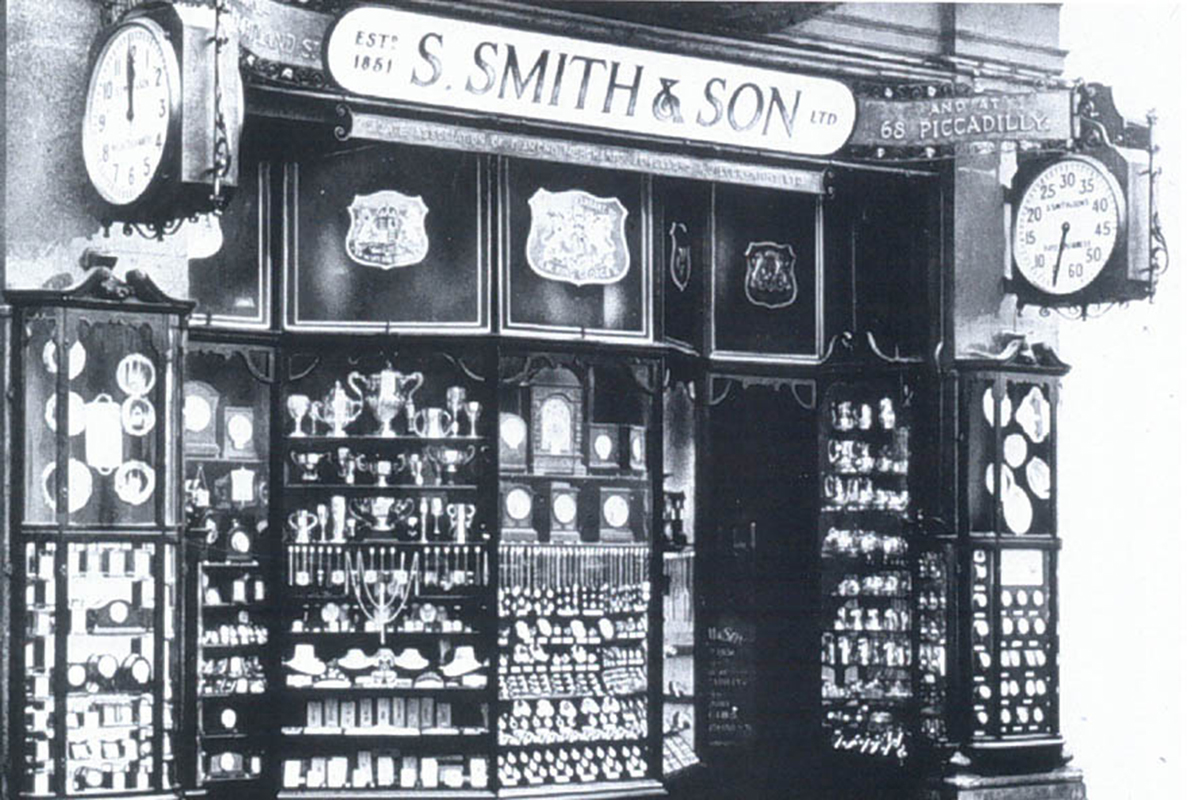


When Samuel Smith Senior opened his first shop in London in 1851, he had no idea that Smiths branded gauges would go on to feature in some of the world’s most iconic cars. From his humble beginnings as a trained craftsman and jeweller, S Smiths & Sons evolved into a supplier of precision watches and, with the arrival of automotives, speedometers and tachometers.
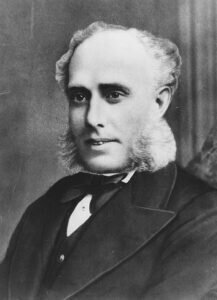
Within twenty years of opening his first shop, Samuel Smith had opened larger premises on The Strand in London, before further expanding with shops in Piccadilly and Trafalgar Square. On his death in 1875, his son, also Samuel, took over the business and by the end of the 19th century S Smiths & Sons had six shops.
The start of the 20th century marked the age of the automobile and Smiths started producing the first British speedometers and odometers. In 1904, King Edward VII asked Smiths for a device to measure the travelling speed of his car, an 18-28hp Mercedes-Simplex. The Smiths historical records include a ledger of Speedometer orders and the first page of the first ledger has, as entry No. 1, ‘H. M. The King, Buckingham Palace’. Subsequently, Smiths was awarded four royal warrants for making speedometers.
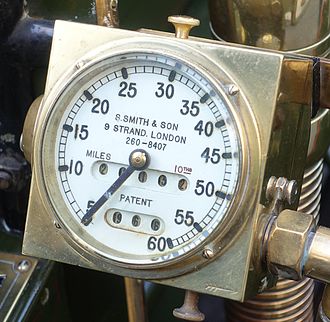
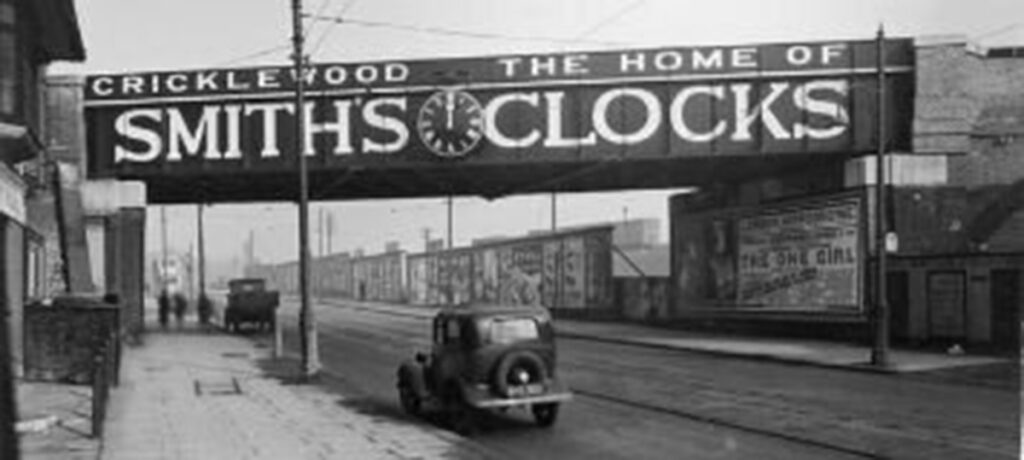
The growth of the business designing and manufacturing automotive gauges resulted in the formation of the public company S Smiths & Sons (Motor Accessories) Ltd in 1914. The outbreak of the First World War drove demand, leading to Smiths erecting a new factory in Cricklewood, North London. The additional manufacturing capacity was not only for automotive instruments but also for aircraft instrumentation and shell fuses for the ongoing war effort.
Smiths instrumentation was now the premier brand for many automobiles and motorcycles of the time and further growth was achieved with the 75% acquisition of Ed. Jaeger (London) Ltd in 1927. This would later become the British Jaeger Instrument Company.
A non-compete agreement with Joseph Lucas in 1930 led to Smiths becoming the undisputed dominant supplier of instruments to British motorcar and motorcycle manufacturing companies.
Five years later there was further expansion when, on acquiring Henry Hughes and Son, Smiths moved into supplying marine gauges, such as navigation instruments and appliances for the British Navy.
The advent of the Second World War drove Smiths to build a new factory outside London in Cheltenham. This decision was validated when the main instrument repair department at Cricklewood was destroyed by bombing in August 1940.
In 1944, the Smiths organisation undertook major restructuring, with the principal company being renamed S Smiths and Sons (England) and the creation of four divisions:
The Anglo-Celtic Watch Co. Ltd factory, a joint venture involving Smiths Industries Ltd, Ingersoll and Vickers Armstrong, was officially opened on the Ynyscedwyn estate in Ystradgynlais in South Wales, UK on March 15, 1947 by Hugh Dalton, a British Labour Party economist and politician. Fondly known locally as the “Tick Tock,” the company became one of Europe’s largest clock and watch manufacturers, producing up to 1.25 million watches annually.
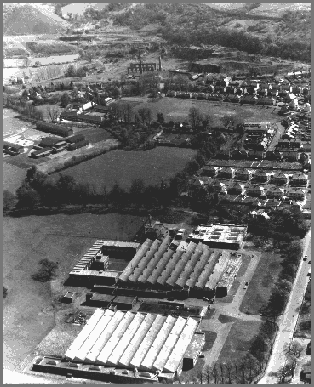
The business evolved to manufacture automotive components and later wiring systems (LUCAS SEI) before relocating the instrumentation business to the Abercrave site. In the factory’s heyday, around 1500-2000 people were employed and it was a major blow to the local economy when it closed its doors in 1999. The factory was demolished to make way for a supermarket in 2011.
Further expansion in the late 1950s and into the early 1960s resulted in the creation of three new divisions:
By 1964, the Smiths group was unrecognisable from the company founded in 1851, with 27 manufacturing sites in the UK and over 25,000 people employed. Smiths instruments featured in many of the iconic cars and motorcycles of the time including the Aston Martin DB5, Jaguar E-Type and Mark II, Mini Mark 1 and II, the Land Rover IIA, AC Cobra, MG MGB GT, Triumph Spitfire, Austin-Healey 3000, the TVR Griffith, and the BSA Lightning motorcycle. Today, CAI continue to build and supply replacement gauges for those and other much-loved classic cars.
The Smiths business continued to evolve, with increased diversification and international operations, and so, in 1967, the company name was changed to Smiths Industries. The company’s contribution to the UK’s technological innovation was recognised in 1968 with the Queen’s Award to Industry.
The UK automotive industry experienced dramatic changes during the 1970s and political and industrial unrest crippled companies. Also, increased overseas competition, with new ideas, technology and designs, changed consumer behaviour. This affected the core market for Smiths instrumentation.
Smiths’ ability to adapt and develop new instrumentation was important. Following the UK government initiative to make commercial vehicles safer by fitting tachographs, Smiths production of the instrument increased from 400 to 4000 units per month with volume orders from British Leyland, Ford and other large automotive companies.
However, by 1979, with the decline in demand seeing no sign of abating, Smiths underwent a major restructuring. By 1983, Smiths Industries focused on aerospace, medical, and industrial markets and decided to divest direct involvement in the European automotive industry. The original equipment and service parts of the car instrument division were sold to Lucas Industries, based in Birmingham.
In 1989, at the end of the decade, Lucas moved the instrumentation business to the Caerbont facility in Abercrave South Wales. The manufacturing of wiring and harness remained at Ystradgynlais. When Lucas decided to withdraw from the instrumentation market, they sold the business to German company Mannesmann VDO AG, with direct management by parent UK company VDO Birmingham.
The period of uncertainty ended in 1993, when the management purchased the business from Mannesmann VDO AG and Caerbont Automotive Instruments (CAI) was born. Although the business continued to design and build gauges for mass markets, there were increasing opportunities in the bespoke and heritage markets. The business continued to grow and evolve, leading to the ownership being transferred to present Managing Director Gavin Roberts in 2011.
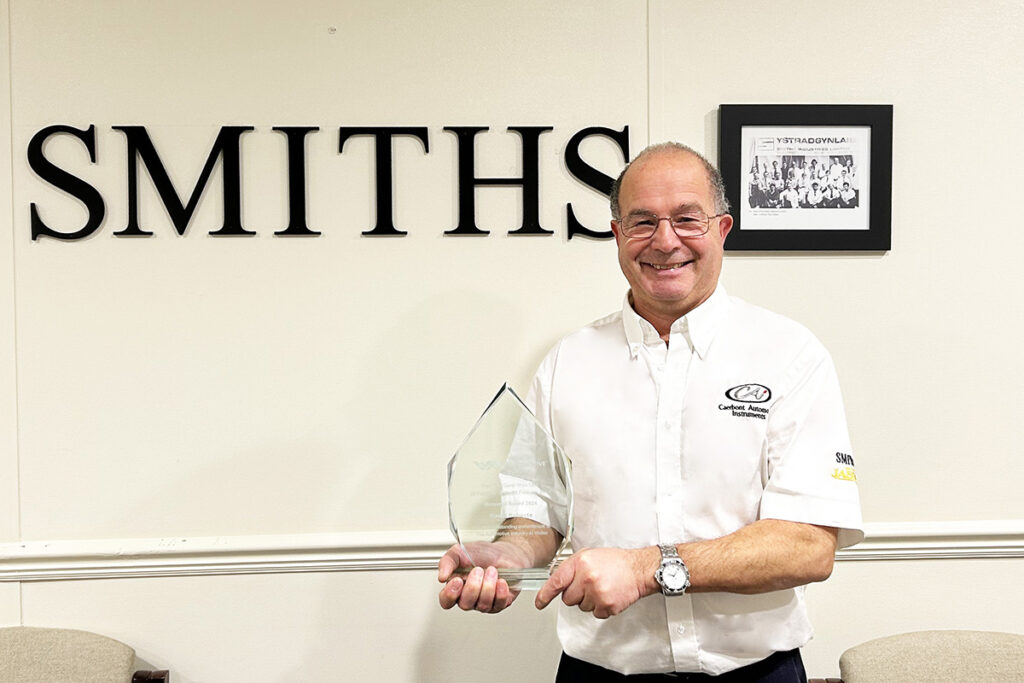
And since 2011 the business has blossomed, adapting to the ever-changing demands of the sector, and increasing the number of projects involving bespoke design and specialist manufacturing.
Caerbont Automotive Instruments continues to supply heritage Smiths and other branded instruments using the original drawings to classic car enthusiasts and high-profile prestige marques like Jaguar and Aston Martin. The company’s engineering expertise has led the business to expand into new markets for bespoke gauges, including specialist automotive instrumentation and for marine applications.
Today, 175 years after Samuel Smith Senior opened his first shop in London, gauges with his name emblazoned on the dial face leave South Wales for destinations all over the world. An incredible legacy, which CAI are proud to keep very much alive.
For further information on Smiths gauges for classic cars and motorcycles please contact us on:
Email: [email protected]
Phone: +44 (0) 1639 732200
You can also follow us on social media for regular news updates, photographs and technical information: